
Plumbing problems have a habit of showing up at the worst possible moment. One day the kitchen sink drains fine, the next morning there’s water pooling under the press and a slow drip behind the tap. Most of these issues start small, and if you catch them early, you can sort a lot of them yourself without ringing a plumber.
The five most common plumbing problems in Irish homes are dripping taps, running toilets, blocked drains, low water pressure, and leaking pipes. Most can be fixed with basic tools, a few cheap parts from the hardware shop, and about an hour of patience. The trick is knowing when it’s a quick DIY job and when you need a qualified plumber on site.
Here’s a straight-talking guide to the five issues we see most often in Dublin homes, what causes them, and how to put them right.
Issue 1: Dripping Taps That Won’t Stop
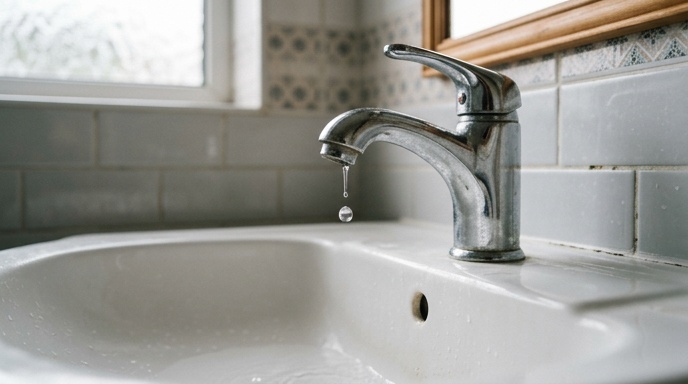
A dripping tap is the most common complaint we hear, and it’s also one of the easiest to fix. A tap that drips once a second wastes around 5,500 litres a year, which adds up on metered supplies and pushes your hot water bill higher than it needs to be.
The cause is almost always a worn washer, a damaged O-ring, or a cartridge that has seen better days. On older taps it’s usually the rubber washer inside the spindle. On modern mixer taps it’s typically the ceramic cartridge.
- Turn off the water supply at the isolation valve under the sink, or at the mains stopcock if there’s no isolator.
- Open the tap to drain any remaining water in the line.
- Unscrew the tap handle, lift off the cover, and use a spanner to remove the spindle or cartridge.
- Replace the washer, O-ring, or full cartridge with a matching part.
- Reassemble, turn the water back on slowly, and check for leaks.
If the drip continues after a fresh washer, the valve seat inside the tap body may be corroded. That’s a job for a plumber with a re-seating tool, or it might be time for a new tap altogether.
Issue 2: A Toilet That Keeps Running
A constantly running toilet is more than just an annoyance. It can waste hundreds of litres a day and put unnecessary strain on your cistern parts. The good news is the fix is usually a €10 to €20 part and twenty minutes of work.
What’s Usually Causing It
Nine times out of ten, the culprit is the flush valve (the rubber flapper at the bottom of the cistern) or the fill valve (the float mechanism that refills the tank). Limescale, especially in hard water areas around Dublin, eats through these parts over time.
How to Fix It
- Lift the cistern lid and watch what’s happening when the toilet refills.
- If water keeps trickling into the bowl, the flush valve seal is worn. Turn off the supply, drain the cistern, and swap the flapper.
- If the water level rises above the overflow pipe, adjust the float or replace the fill valve.
- Check the chain isn’t too tight, which can hold the flapper slightly open.
If you’ve replaced the parts and it still runs, the cistern itself may have a hairline crack or the overflow pipe may be set incorrectly. At that stage, get a professional to take a look.
Issue 3: Blocked Sinks and Drains
Blocked drains are the bane of every kitchen and bathroom. In the kitchen it’s usually grease, food bits, and coffee grounds. In the bathroom it’s hair and soap scum building up in the trap.
Before you reach for harsh chemical drain cleaners, try the mechanical approach. Caustic drain cleaners can damage older pipework and they rarely clear a serious blockage anyway.
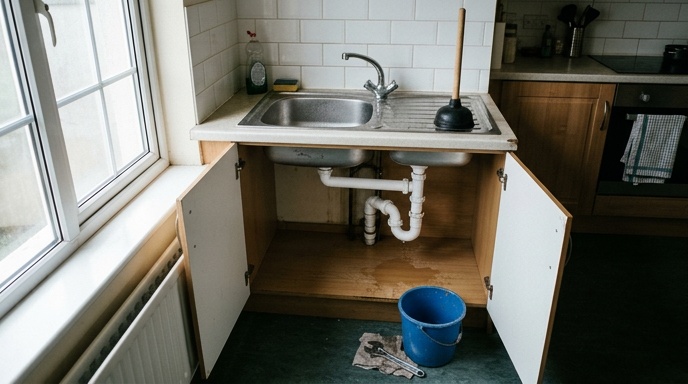
- Start with a plunger. Cover the overflow with a wet cloth to create a proper seal, then plunge firmly for 30 seconds.
- If that doesn’t shift it, unscrew the U-bend under the sink with a bucket underneath. Most blockages sit right there.
- For bathroom drains, a drain snake or even a straightened wire coat hanger will pull out hair clumps.
- Finish with a kettle of hot water mixed with a cup of bicarbonate of soda and a splash of white vinegar to clear residue.
If the blockage is deeper in the system, you’ll see multiple drains backing up at once, or water rising in the shower when the toilet flushes. That’s a sign of a main drain issue, and you’ll want to call out a plumber with drain rods or a jetting unit. The Citizens Information site has useful guidance on what falls under your responsibility versus Uisce Éireann’s.
Issue 4: Low Water Pressure
If your shower has gone from a power blast to a sad trickle, or it takes forever to fill the kettle, low pressure is the issue. The cause depends on whether it’s affecting one tap or the whole house.
Single Tap or Shower
If only one outlet is weak, the problem is almost always a blocked aerator on the tap spout or a clogged shower head. Limescale builds up in the small holes and chokes the flow.
- Unscrew the aerator from the tap spout and soak it in white vinegar overnight.
- Take down the shower head and do the same. A toothbrush helps clear the holes.
- Rinse, refit, and you should see normal flow restored.
Whole House
If the pressure is poor everywhere, check the mains stopcock is fully open. Then check that the isolation valve on the main inlet hasn’t been partially closed. If both are open and you’re still struggling, you may have a leak somewhere in the supply pipe, or a build-up in older lead or galvanised pipework. That needs a professional diagnosis.
Issue 5: Leaking Pipes and Hidden Drips
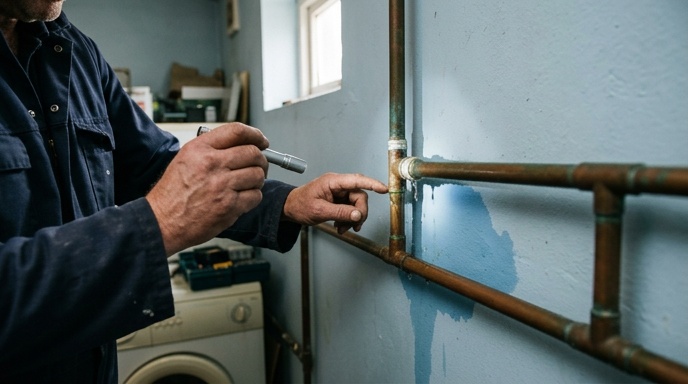
A leaking pipe is the issue that causes the most damage if ignored. Even a slow drip behind a kitchen unit can rot floorboards and bring down a ceiling within months. Catching leaks early is the difference between a quick repair and a major insurance claim.
Common signs to watch for include damp patches on walls, peeling paint, a musty smell, an unexplained jump in your water bill, or the sound of running water when nothing is on.
- For a small pinhole leak on a copper pipe, a pipe repair clamp or self-amalgamating tape will hold it temporarily until a plumber can solder a proper fix.
- For a leaking compression joint under a sink, try tightening the nut a quarter turn. If that doesn’t seal it, drain the pipe and replace the olive.
- For any leak on a gas pipe or near the boiler, do not attempt a DIY fix. Turn off the gas at the meter and call an RGI registered installer immediately.
Push-fit fittings have made small repairs much easier for homeowners, but anything involving the heating system, hot water cylinder, or gas appliances should always go to a registered professional. The risk of getting it wrong is too high.
When to Stop and Call a Plumber
DIY has its limits. Some jobs save you money. Others cost you a fortune when they go sideways. As a rule of thumb, ring a plumber if you’re dealing with any of the following.
- Any leak on a gas pipe, boiler, or flue.
- No water at all in the house.
- A burst pipe that’s actively flooding.
- Hot water that’s gone cold with no obvious cause.
- Sewage backing up through floor drains or showers.
- Any work that involves cutting into walls or floors.
Getting on top of these five common issues will save you money, prevent water damage, and keep your home running smoothly. If you’re not confident tackling a problem, or it’s bigger than expected, get in touch with our team for a straight quote and a proper fix.